
Gas Safety Certificate Legal Requirements, Compliance and Best Practices for Property Owners

A gas safety certificate is an official record that confirms gas appliances, pipework, and flues in a rental property have been checked by a qualified professional and meet safety standards. In the UK, this document is often referred to as a CP12 or Landlord Gas Safety Record.
For landlords, the gas safety certificate is not simply paperwork. It is proof that an annual gas safety check has been completed by a Gas Safe registered engineer. This inspection ensures that boilers, cookers, fires, and other gas appliances are working correctly and do not pose a risk to tenants.
A landlord gas safety certificate confirms that:
- Gas appliances have been inspected
- Ventilation routes are clear
- Flues are operating properly
- Gas pipework is safe
- Safety devices are functioning
The purpose of the gas safety certificate is straightforward. It protects tenants from gas leaks, carbon monoxide exposure, and fire risks. It also protects landlords from legal action and penalties.
Many property owners ask whether a gas safety certificate is required for selling a house. While it is not a strict legal requirement for sellers in all cases, buyers and solicitors often request evidence of recent inspections. This highlights how important proper gas appliance inspection and documentation have become in property transactions.
The Legal Framework Behind Gas Safety Certificates
The legal requirement for a gas safety certificate comes from the Gas Safety Installation and Use Regulations in the UK. These regulations make it clear that landlords must arrange an annual gas safety check for every rental property containing gas appliances.
Enforcement is handled by the Health and Safety Executive, known as the HSE. The HSE has the authority to investigate non compliance, issue penalties, and prosecute landlords who fail to meet their legal obligation for landlords.
Under the law, landlords must:
- Ensure all gas appliances are checked every 12 months
- Use a qualified gas engineer inspection service
- Provide tenants with a copy of the landlord gas safety certificate
- Keep records for at least two years
Failure to comply can lead to serious consequences. Penalties for breaching gas safety regulations can include heavy fines and even imprisonment in extreme cases. In addition, landlord insurance policies may become invalid if proper annual gas safety checks have not been carried out.
It is important to understand that gas safety regulations are not optional guidelines. They are binding legal requirements designed to protect lives.
Who Is Legally Responsible?
Responsibility for obtaining a gas safety certificate rests with the landlord. Even if a letting agent manages the property, the ultimate legal duty remains with the property owner unless there is a clear written agreement transferring responsibility.
A Gas Safe registered engineer must carry out the inspection. Only a properly qualified professional can issue a valid CP12 certificate. This answers a common question: can a former gas fitter do gas safety checks? The answer is no, unless they are currently registered and certified.
Landlords should always verify Gas Safe registration before booking a gas safety certificate inspection. Checking credentials protects both the landlord and the tenant.
If you manage multiple properties, including HMOs, you must ensure each property receives its own landlord gas safety certificate. There are no exceptions for shared accommodation or student housing.
Certification Process Step by Step
Understanding how to book a gas safety certificate inspection and what happens during the process helps landlords stay organized and compliant.
Step 1: Booking the Inspection
Landlords contact a Gas Safe registered engineer to arrange an appointment. Some providers allow you to order a gas safety certificate online, which can make scheduling easier.
Step 2: On Site Checks
During the annual gas safety check, the engineer will inspect all gas appliances. This includes boilers, cookers, and gas fires.
Step 3: Testing and Inspection
The engineer will carry out a detailed gas appliance inspection. This involves checking for gas leaks, ensuring correct pressure levels, examining flues, and confirming ventilation is adequate.
Step 4: Documentation
After the inspection, the engineer completes a gas safety report. This document outlines the condition of each appliance and confirms whether the property meets safety standards.
Step 5: Issuance of Certificate
If everything is safe, the landlord receives the gas safety certificate. This document may be provided digitally or in paper form.
Step 6: Tenant Distribution
Landlords must provide tenants with a copy within 28 days of the inspection. New tenants must receive the certificate before moving in.
This structured process ensures compliance and creates a clear record of safety checks.
Technical Breakdown of Inspection Criteria
A gas safety certificate inspection is more detailed than many landlords realise. It covers several key safety areas.
Combustion Performance
The engineer checks whether appliances burn fuel correctly. Poor combustion can produce dangerous carbon monoxide.
Ventilation Standards
Gas appliances need proper airflow. Blocked or inadequate ventilation can lead to harmful gas build up.
Flue and Chimney Checks
Flues must safely remove combustion gases. Any obstruction or damage can pose serious risks.
Gas Tightness Testing
Pipework is checked for leaks to ensure no gas escapes into the property.
Safety Devices
Modern appliances contain safety shut off systems. These are tested to confirm they activate correctly if a fault occurs.
Understanding what is included in a gas safety certificate report helps landlords appreciate the value of the inspection. It is not a quick visual check. It is a structured safety assessment.
Record Keeping and Documentation Requirements
Landlords must keep each landlord gas safety certificate for at least two years. Good record keeping is essential in case of disputes or inspections.
Certificates can be stored digitally. Many providers now offer online access to your gas safety report, making it easier to manage multiple properties.
Landlords often ask how often does a gas safety certificate need renewing. The answer is every 12 months. However, you can carry out the inspection up to two months before the expiry date without changing the renewal cycle. This flexibility helps landlords plan ahead.
Proper documentation demonstrates compliance and reduces the risk of legal trouble.
Risk and Liability Management
Not having a valid gas safety certificate exposes landlords to serious risks.
Criminal Liability
Failure to arrange an annual gas safety check can lead to prosecution.
Civil Claims
If a tenant suffers harm due to unsafe gas appliances, the landlord may face compensation claims.
Insurance Problems
Many policies require compliance with gas safety regulations. Missing certificates can invalidate coverage.
Immediate Danger Situations
If an appliance is classified as Immediately Dangerous during inspection, it may be disconnected. Landlords must arrange urgent repairs and possibly a re inspection before a new gas safety certificate can be issued.
Understanding what happens if you do not have a gas safety certificate is crucial. The financial and legal impact can be severe.
Gas Safety for Different Property Types
Gas safety obligations apply to various types of properties.
Single Let Properties
Standard annual gas safety check requirements apply.
HMOs
Shared properties often have multiple appliances. Each must be inspected and included in the landlord gas safety certificate.
Holiday Lets
Short term rental properties also require a gas safety certificate if they contain gas appliances.
Student Accommodation
Landlords must provide a copy of the certificate to each group of tenants.
Mixed Use Buildings
If residential areas contain gas appliances, safety checks remain mandatory.
Understanding these differences ensures no property type is overlooked.
Non Compliance, Enforcement and Penalties
Penalties for breaching gas safety regulations can be strict.
The HSE can:
- Issue improvement notices
- Prosecute landlords
- Impose unlimited fines
- Seek custodial sentences in extreme cases
Landlords who ignore annual gas safety checks may also face restrictions on serving eviction notices.
Real world cases have shown that courts treat gas safety violations seriously. Protecting tenants is the priority, and the law reflects this.
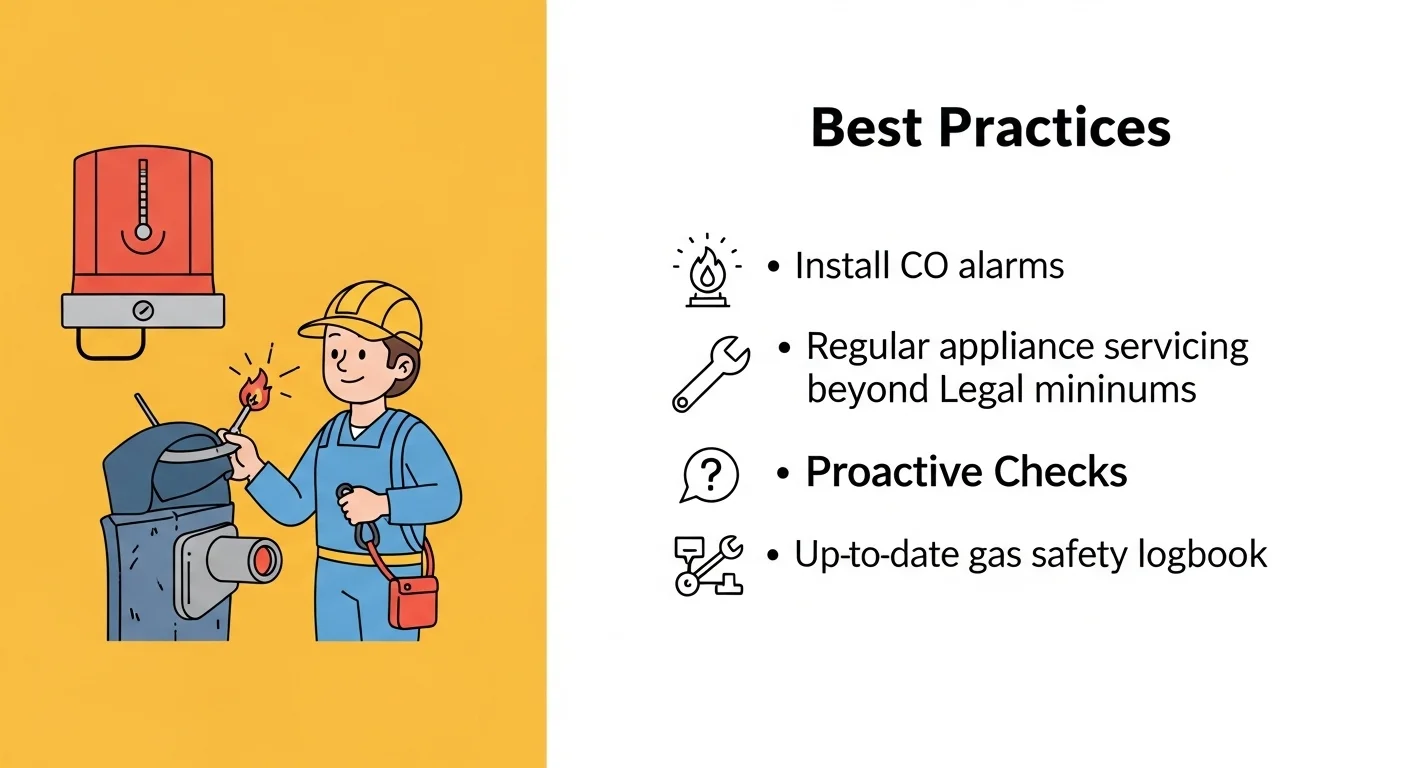
Preventative Gas Safety Strategy
The best approach to compliance is prevention.
Create a Maintenance Calendar
Schedule annual gas safety checks well before expiry dates.
Use Reminder Systems
Digital alerts can prevent missed deadlines.
Conduct Pre Inspection Checks
Before the engineer arrives, ensure appliances are accessible and tenants are informed.
Educate Tenants
Encourage tenants to report unusual smells or appliance issues immediately.
A proactive approach reduces stress and helps ensure every gas safety certificate is obtained on time.
Gas Safety Certificate Versus Other Certificates
Landlords must manage multiple compliance documents.
Gas Safety Certificate
Confirms gas appliances are safe.
Electrical Installation Condition Report
Covers electrical systems.
Energy Performance Certificate
Shows energy efficiency rating.
Boiler Service Record
Confirms maintenance but does not replace a gas safety certificate.
Many landlords confuse a boiler service with a gas safety certificate inspection. A service focuses on maintenance, while the certificate confirms legal compliance. Both are important, but they are not the same.
Future of Gas Safety Compliance
The gas safety certificate process continues to evolve.
Digital documentation is becoming more common. Online systems make it easier to order a gas safety certificate online and store records securely.
There is growing awareness about safety and environmental responsibility. Landlords who prioritise regular gas appliance inspection and timely certification demonstrate professionalism and care.
As safety standards improve, staying informed about updates to gas safety regulations will remain essential.
Conclusion
A gas safety certificate is one of the most important compliance documents a landlord must obtain. It confirms that gas appliances are safe, protects tenants from serious harm, and shields property owners from heavy penalties.
From understanding legal requirements for landlords to knowing how to book a gas safety certificate inspection, every property owner should treat gas safety as a top priority. Annual gas safety checks are not simply administrative tasks. They are essential safeguards.
Whether you manage a single flat or a portfolio of HMOs, securing your gas safety certificate on time ensures compliance, peace of mind, and professional credibility. By following best practices, maintaining accurate records, and working with qualified engineers, landlords can meet their legal obligation for landlords while protecting both property and people.
Frequently Asked Compliance Questions
Q1. What if a tenant refuses entry?
Landlords must show reasonable effort to gain access. Keep written records of communication attempts.
Q2. What if an appliance is tenant owned?
If it is connected to the gas supply, it usually falls within inspection requirements.
Q3. How long does inspection take?
Most annual gas safety checks take between 30 minutes and one hour, depending on the number of appliances.
Q4. What happens if a property fails the gas safety check?
The engineer will classify issues. Repairs must be completed before a valid gas safety certificate can be issued.
Q5. Can I do the check myself?
No. Only a qualified gas engineer inspection conducted by a Gas Safe registered engineer can produce a valid landlord gas safety certificate.
Read More Articles: https://blogsmag.co.uk/